Category: Personal Essays & Reflections

  • The mind is not a mirror; it is a paintbrush

    The mind is not a mirror; it is a paintbrush

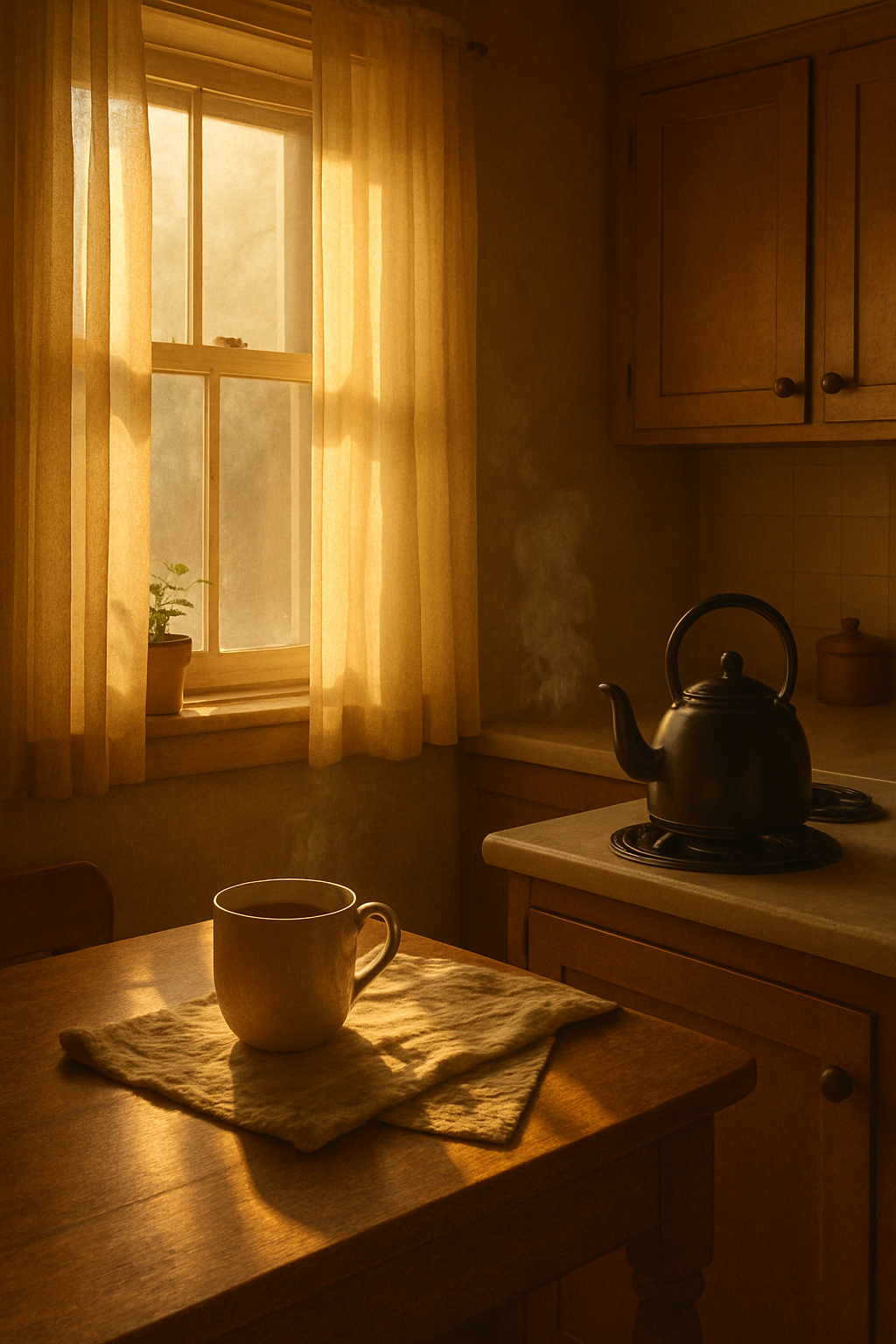
    On Sundays, my house becomes a softer place. Light drips through the curtains like warm honey, the kettle hums its low morning song, and the world feels briefly negotiable. That particular Sunday, I sat alone in my study with a fresh cup of coffee and a new leather diary resting on the desk. The diary smelled of earth and winter—the kind of scent that whispers that beginnings never arrive loudly.

    When I opened it, the pages gave a faint rustle, like someone clearing their throat before speaking.
    Go on, they seemed to say.
    Tell the truth.

    I tried.

    I wrote about how, despite nothing in my life looking dramatically different from the year before, everything inside me had shifted in quiet, irreversible ways. Turning points don’t come with fanfare; they come disguised as normal days. I wrote down the small pivots that have shaped me—leaving cities, leaving people, falling in love, falling apart, rebuilding, losing again, learning the same lesson twice. Maybe three times.

    Life, I wrote, is not a series of events but a series of awakenings.

    I paused, letting the ink dry, and wondered why no one prepares us for the things that matter. We are taught how to add fractions, how to write topic sentences, how to shake hands firmly—but not how to hold sadness without drowning in it, or how to forgive ourselves after years of being our harshest critic. No one explains the architecture of the mind or the storms it can generate.

    I was lost in those thoughts when I heard the softest voice behind me.

    “Muma?”

    My son stood there, small and hopeful, holding his kindergarten book like an offering.

    “Will you read me a story?”

    It took only a second for the room to shift—the study dissolving into a memory of my father reading to me when I was his age. My father would make up stories out of thin air, weaving worlds where I was always the hero, always chosen, always enough. I lived inside those stories long after he closed the book. Some days, I still do.

    Back then, I carried my imagination like armor. I believed life would bend toward my desires simply because I felt them so intensely. For years, it worked. I manifested small miracles: the right opportunities, the right people, the right moments. I was buoyant, unburdened, almost enchanted.

    But enchantment has an expiration date.

    Sometime in my late twenties, the world began to weigh differently. Expectations thickened around me—career stability, financial sense, a partner, a plan, a future I could explain to others. My rose-colored glasses fogged over until the world grew grey at the edges.

    I lost myself in that grey.

    I didn’t break dramatically. I eroded quietly. One day I looked around and realized I no longer recognized my life or the woman living it. Loneliness settled in like a permanent tenant. The future felt too heavy to hold, and the past kept tugging at my sleeves.

    Around thirty, out of desperation more than devotion, I turned inward. Slowly. Awkwardly. Like someone relearning how to walk.

    I read obsessively—Yogananda on the soul, Abraham Hicks on thought, Joe Dispenza on mind, Julia Cameron on creativity, Aristotle on reason. They said the same thing in different languages:

    You shape your life from the inside out.
    The mind is not a mirror; it is a paintbrush.

    It wasn’t a single moment that changed me but the accumulation of small ones—breaths taken intentionally, thoughts paused before believed, pages written instead of swallowed.

    That Sunday morning, standing in my study with my son waiting beside me, I realized I wasn’t just holding his book. I was holding the opportunity to rewrite the story for both of us.

    “Come here,” I said, lifting him onto my lap.

    He settled in, warm and trusting, his head tucked under my chin. As I began to read, his small fingers traced the pictures as though he were entering the story himself.

    I thought about the things I wanted to pass down to him—not money or achievements or the illusion of perfection. But the skills that might save him one day: how to sit with fear, how to soften disappointment, how to listen to his body when his mind is loud, how to trust his inner world even when the outer one feels demanding and strange.

    As I read, he looked up at me and smiled in that unguarded way only children can. I pressed a kiss into his hair and felt something settle quietly inside me, something I hadn’t felt since girlhood.

    It was the return of color.
    Not the vibrant pink of old rose-colored glasses, but a new kind—soft, earned, real.

    After I tucked him in for his nap, I returned to my diary.
    The pages waited.

    This time, I wrote not about what I had lost, but about what I was learning to reclaim:
    my wonder,
    my inner steadiness,
    my ability to imagine possibilities before seeing proof of them.

    Some pages life turns for you.
    Some you turn yourself.
    And some, like this, you turn for the sake of someone who will one day read your story and find their own strength in the margins.
  • Where Love Begins and Fear Ends

    Where Love Begins and Fear Ends

    One troubled marriage or a romance—what havoc can it bring into our lives? Love is one of the most desired feelings or emotions in the world. People seek it all their lives but seldom get enough of it. To be in the warmth of love, affection, and care—that’s all we want? And can we really become emotionally misshapen without it? It’s a powerful thing, but unstable for those who don’t understand it. As humanity’s simplest truth, it remains one of the most difficult forces for people to sustain. Is it really? We can survive without it, can’t we?

    Congrats… on nothing. Centuries of poetry, philosophy, and art have been built around it, yet we continue to struggle to open ourselves to it, hold onto it, and trust its presence in our lives. The contradiction is striking: we long for love, yet so often sabotage it without fully understanding why.

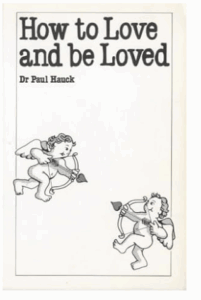
    Dr. Paul Hauck was a renowned American clinical psychologist and author who specialized in Rational Emotive Behavior Therapy (REBT). He wrote in his work, How to Love and Be Loved, “The neurotic need for love, rather than the practical desire for love, has caused more pain in people who are supposed to love people than any other single thing.”


    “I take exception to this. Unless we are talking about helpless
    children I do not see how we can correctly claim that love is
    absolutely indispensable and that we are going to go into a life
    worse than hell if we are not loved by someone, intimately, and
    constantly.
    The neurotic need for love rather than the practical desire for
    love, has caused more pain in people who are supposed to love
    each other than any other single thing.
    Why do you have to be loved? Since when does somebody
    else’s loving you make you a worthwhile human being? Weren’t
    you worthwhile before you were loved? Will you let other people
    pass judgement on you (through their love) to say that you are
    worthwhile or not? There has to be something wrong when you
    turn such an evaluation over to other people who have no exper-
    tise concerning you. Why should any other person be able to tell
    you whether or not you are acceptable?”

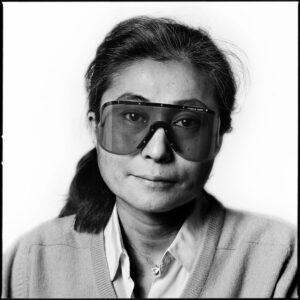
    Yoko Ono once wrote, “The opposite of love is fear, not hate.” At first glance, the statement seems almost too simple, but its accuracy becomes clearer the more one observes human behavior. Hate is loud and obvious; fear operates quietly, shaping our impulses long before we speak or act. It is fear—fear of rejection, fear of

    Yoko Ono
    YOKO ONO

    loss, fear of repeating the past—that erodes love long before conflict or resentment ever enters the picture. Much of what adults call caution or logic is often fear wearing a more acceptable mask.

    Psychologists note that individuals interpret present-day relationships through the lens of accumulated past experiences. and keeps becoming numb to feeling it deep in their hearts. We assume we are responding to what is happening now, but more often, we are responding to memories—unhealed wounds, disappointments, betrayals, or moments of emotional neglect that taught us to guard ourselves. Fear convinces us that withholding love means protecting ourselves, when in truth it only builds distance.

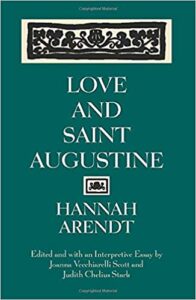
    Love and Saint Augustine
    Love and Saint Augustine

    Political philosopher Hannah Arendt articulated this dynamic decades earlier in Love and Saint Augustine, where she wrote, “Fearlessness is what love seeks.

    ” For her, love is impossible when individuals project imagined disasters into the future or remain entangled in guilt from the past. “The only valid tense is the present,” she argued, calling that love requires presence, clarity, and an ability to meet life without the interference of old narratives. Young people fall in love so easily, not because they understand it better, but because they have not yet developed the elaborate defenses adults accumulate over time.

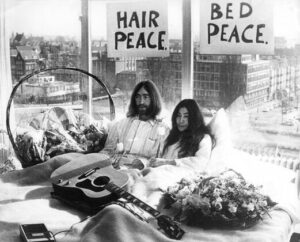
    The idea that love requires a disciplined form of presence echoes through the reflections of John Lennon as well. In an interview recorded in the early 1970s, Lennon said, “There are two basic motivating forces: fear and love. When we are afraid, we pull back from life. When we are in love, we open.”

    His words, often overshadowed by his celebrity, reveal an unexpectedly psychological understanding of intimacy. Openness requires courage; fear closes the door long before love has a chance to enter.

    Lennon famously insisted that love is not self-sustaining, remarking, “You’ve got to work on it like it’s a precious gift—a plant you have to water.” This metaphor is powerful because it challenges the cultural fantasy that love is effortless. Instead, his view places responsibility squarely on individuals to sustain tenderness, honesty, and emotional availability.

    Yoko Ono, reflecting on her own experience, admitted that she had nearly given up hope for love, believing it had passed her by. Yet she also acknowledged that love often appears unexpectedly when one remains open to the possibility rather than retreating into cynicism.

    Modern life, however, makes emotional openness increasingly difficult. People avoid uncomfortable feelings by numbing themselves through intoxication — alcohol, medication, endless entertainment, or the digital noise that fills any quiet moment. This avoidance may provide temporary relief, but it prevents the introspection necessary for genuine intimacy. Emotional numbing strengthens fear, and fear, in turn, weakens love.

    Centuries before psychology or celebrity culture, Rumi expressed the same insight in a single, urgent plea: “Let’s love each other, before we lose each other.” His poetry highlights an uncomfortable human tendency: people often express affection too late—at funerals, in nostalgia, in regret. The living receive less tenderness than the dead. Fear prevents people from offering the love they feel while they still have time.

    Across these voices—Ono, Arendt, Lennon, and Rumi—a surprising coherence emerges. They each argue, in different languages and eras, that love does not fail on its own. It fails when individuals allow fear to govern their choices. It fails when past pain dictates present behavior. It fails when vulnerability is treated as danger rather than a connection. And it fails when people wait for perfect conditions that never arrive.

    Yoko Ono distilled the idea once more when she wrote, “All your experiences are effective if you act with love.” The emphasis is on action—on choosing love not only when it is easy, but especially when fear urges us to withdraw. The question, then, is not whether love exists or whether we are capable of it. The question is whether we are willing to stop rehearsing our fears, to step out from under the weight of our past, and to meet one another in the only place where love can live: the present moment.

    Ever wonder how sometimes it’s easier for a teenager to find true love than for someone who has lived half of his life without having ever tasted the essence of love? One must have struggled in relationships and will always be, definitely, live his life full of fears, may lack ‘purity of being’ and always finds trouble in ‘accepting true love’‘.

    “Fearlessness is what love seeks… Such fearlessness exists only in the complete calm that can no longer be shaken by events expected of the future… Hence, the only valid tense is present, the Now,” wrote political philosopher, author, and Holocaust survivor Hannah Arendt in her book Love and Saint Augustine. Love should be put ahead”. It is the only solution to building a world that is better and more just, and it is also the way to eternal happiness and peace.

    An elemental truth we might glimpse is that we live in a state of tension between the need to reveal and the need to conceal ourselves, we also carry an urge to share our true feelings, but we fear that we will become vulnerable, or we will be rejected or criticized. As a result, we tend to settle for commonplace discussions about the superficialities of life.

    We don’t need to acquire bigger things in life; one doesn’t die if one doesn’t get a bigger house or more vitamins. Human needs are few, and it takes a little to acquire them, in spite of the advertisements on the internet.

  • Does a Slower Life Make Us Happier?

    It’s a question that grows more relevant with each passing year — as our world accelerates, as expectations rise, and as we move through our days with a velocity that leaves little room to simply exist.

    Buddha’s timeless reminder — “Relax the mind and productivity will follow” — feels almost radical now. We strive for meaningful, fulfilling lives, yet forget that the best things unfold quietly, gradually, little by little. Mindfulness, in its simplest form, is a kind of walking meditation: to be truly present with what we are doing. And when we aren’t? We miss something essential — life itself.

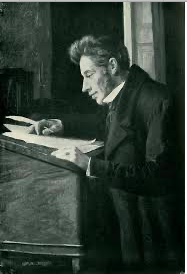
    Søren Kierkegaard
    Søren Kierkegaard

    Why the Fast Life Makes Us Unhappy — Kierkegaard Saw It Coming

    “Of all ridiculous things,” Kierkegaard — a Danish philosopher, theologian, poet, and religious author, who is widely considered to be the first existentialist philosopher — wrote when contemplating our greatest source of unhappiness, “the most ridiculous seems to me, to be busy—to be a man who is brisk about his food and his work.”

    In a world obsessed with speed, Kierkegaard’s words feel prophetic. Constant busyness doesn’t make life more meaningful; it fractures our attention, scatters our purpose, and creates the illusion that movement equals progress.

    Slowing down, on the other hand, creates flow. When we are absorbed in what we’re doing — meditating on a task, staying with it fully — our mind enters a state where ideas, insights, and creativity move freely. This is not laziness; it is alignment.

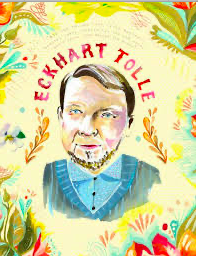
    Eckhart Tolle
    Eckhart Tolle

    Eckhart Tolle and the Ancient Art of Just Being

    Eastern traditions have practiced this for millennia: living in the natural rhythm of simply being. But the world’s greatest challenge lies in bridging the gap between knowing and doing — being aware of both at the same moment.

    The spiritual teacher Eckhart Tolle, author of The Power of Now and A New Earth, captures the essence of our modern struggle: “In today’s rush, we all think too much, seek too much, want too much and forget about the joy of just being.”

    Slowing down is not a passive surrender; it is an intentional practice. Many high-performing leaders, entrepreneurs, and creatives now admit that slowing down is not optional — it’s essential. Not for productivity alone, but for a deeper appreciation of life and the kind of clarity that fast-living suppresses.

    Slowness, then, becomes a choice — one that must be made repeatedly, in every moment.

    In many cases, to lead a good life, most fast-paced leaders and entrepreneurs believe that slowing down is the key. For greater appreciation for life and a greater level of happiness, slowing down is a deliberate choice that we have to make every moment, which yield’s better results in one’s life endeavours.

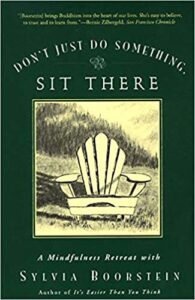
    Sylvia Boorstein

    Don’t Just Do Something, Sit There: A Mindfulness Retreat with Sylvia Boorstein


    Don’t Just Do Something, Sit There: A Mindfulness Retreat with Sylvia Boorstein

    Modern humans are conditioned to overdo, overachieve, and, obviously, that is why most of them are depressed and anxious. This is what the great Buddhist teacher and psychotherapist Sylvia Boorstein talked about in her mindful retreat — “Don’t Just Do Something, Sit There:”

    “Slow is not better than fast. It’s just different. Everything changes, regardless of pace, and direct firsthand experience of temporality can happen while you are strolling just as much as while you are stepping deliberately and slowly. The speed-limit guide for mindful walking is to select the speed at which you are most likely to maintain attention. Shift up or down as necessary.”

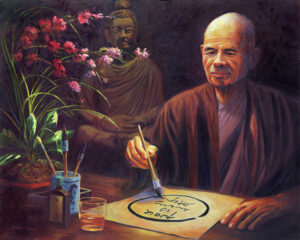
    Thich Nhat Hanh and the Beauty of the Present Moment

    The father of teachings on mindfulness, Zen Master —Thich Nhat Hanh — a global spiritual leader, poet, and peace activist insist, “Drink your tea slowly and reverently, as if it is the axis on which the world earth revolves–slowly, evenly, without rushing toward the future. Live the actual moment.”

    Leading a mindful daily routine, being aware of our every action and reaction, every thought, and every word that we speak can add quality to our everyday life. Zen Master summed it up well when he said, “We have to walk in a way that we only print peace and serenity on the Earth. Walk as if you are kissing the Earth with your feet.”

    Thich Nhat Hanh is a painting by Steve Simon which was uploaded on October 1st, 2014.
    Thich Nhat Hanh is a painting by Steve Simon which was uploaded on October 1st, 2014.

    Science Agrees: Slowing Down Changes the Brain

    Although mindfulness is rooted in ancient wisdom, the scientific community now validates what spiritual traditions long taught. Neuroplasticity — the brain’s ability to reorganize and grow — thrives when we are intentional and present.

    William James, in the late 19th century, captured the essence of neuroplasticity before the term existed: “Our brain can restructure itself based on our perception and experience.”

    Slowing down doesn’t hinder achievement — it refines it. A slower pace clarifies our desires, aligns thought with action, and strengthens the pathways that support long-term well-being.

    Kaveri Patel’s Poetic Reminder to Stop Running

    A mother, poet, teacher of mindfulness ideology, and a healer, Kaveri Patel describes beautifully in one of her poetry, what it’s like to slow down:

    Dear you, You who always have so many things to do… your mind spinning like fan blades at high speed… What if you closed your eyes? Would the world fall apart without you? Or would your mind become the open sky… as you just watched and smiled?

    Her words expose the exhaustion we carry — and the lie we tell ourselves that we must always be on, always ready, always doing.

    People who are aware of the benefits of slowing down, follow different mindfulness practices at least once during their day. Few like to meditate on every task at their hand, and most just like to be mindful only of the tasks they like to do.

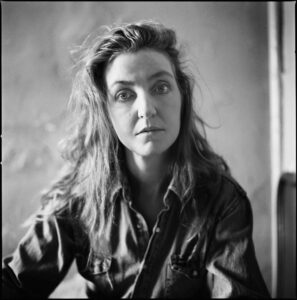
    Rebecca Solnit
    Rebecca Solnit

    Rebecca Solnit: Walking as a Philosophy of Life

    Rebecca Solnit, Buddhist thinker and author of Wanderlust: A History of Walking, offers a simple insight with profound implications: “I suspect that the mind, like the feet, works at about three miles an hour.”

    If that’s true, then modern life is moving far faster than thoughtfulness can keep up with. Solnit advocates for preserving time and space to walk — not only for the sake of health, but for the preservation of imagination and presence.

    She describes the magic of walking as a union of motion and mindfulness: “Walking is a state in which the mind, the body, and the world are aligned… three notes suddenly making a chord.”

    To walk is to move without rushing — to arrive without hurrying.

    Slowness Is Not a Luxury — It’s a Practice

    Mindful living or slowing down is not about occasional escapes or taking vacations. It is about showing up fully in the everyday:

    Taking a bath. Preparing food. Answering an email. Speaking a word. Making a choice.

    It means focusing on one thing at a time instead of fracturing yourself across many. It means reclaiming the attention that modern life is constantly stealing from you.

    And most of all, it means living — fully, deliberately — rather than rushing through the very life you are trying to enjoy.