It’s a question that grows more relevant with each passing year — as our world accelerates, as expectations rise, and as we move through our days with a velocity that leaves little room to simply exist.
Buddha’s timeless reminder — “Relax the mind and productivity will follow” — feels almost radical now. We strive for meaningful, fulfilling lives, yet forget that the best things unfold quietly, gradually, little by little. Mindfulness, in its simplest form, is a kind of walking meditation: to be truly present with what we are doing. And when we aren’t? We miss something essential — life itself.
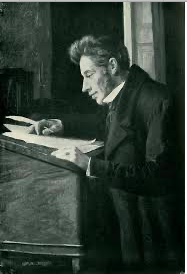
Why the Fast Life Makes Us Unhappy — Kierkegaard Saw It Coming
“Of all ridiculous things,” Kierkegaard — a Danish philosopher, theologian, poet, and religious author, who is widely considered to be the first existentialist philosopher — wrote when contemplating our greatest source of unhappiness, “the most ridiculous seems to me, to be busy—to be a man who is brisk about his food and his work.”
In a world obsessed with speed, Kierkegaard’s words feel prophetic. Constant busyness doesn’t make life more meaningful; it fractures our attention, scatters our purpose, and creates the illusion that movement equals progress.
Slowing down, on the other hand, creates flow. When we are absorbed in what we’re doing — meditating on a task, staying with it fully — our mind enters a state where ideas, insights, and creativity move freely. This is not laziness; it is alignment.
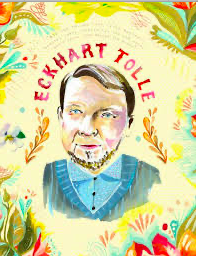
Eckhart Tolle and the Ancient Art of Just Being
Eastern traditions have practiced this for millennia: living in the natural rhythm of simply being. But the world’s greatest challenge lies in bridging the gap between knowing and doing — being aware of both at the same moment.
The spiritual teacher Eckhart Tolle, author of The Power of Now and A New Earth, captures the essence of our modern struggle: “In today’s rush, we all think too much, seek too much, want too much and forget about the joy of just being.”
Slowing down is not a passive surrender; it is an intentional practice. Many high-performing leaders, entrepreneurs, and creatives now admit that slowing down is not optional — it’s essential. Not for productivity alone, but for a deeper appreciation of life and the kind of clarity that fast-living suppresses.
Slowness, then, becomes a choice — one that must be made repeatedly, in every moment.
In many cases, to lead a good life, most fast-paced leaders and entrepreneurs believe that slowing down is the key. For greater appreciation for life and a greater level of happiness, slowing down is a deliberate choice that we have to make every moment, which yield’s better results in one’s life endeavours.
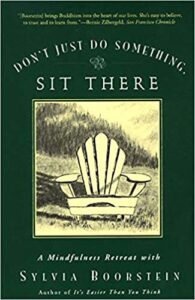
Don’t Just Do Something, Sit There: A Mindfulness Retreat with Sylvia Boorstein
Don’t Just Do Something, Sit There: A Mindfulness Retreat with Sylvia Boorstein
Modern humans are conditioned to overdo, overachieve, and, obviously, that is why most of them are depressed and anxious. This is what the great Buddhist teacher and psychotherapist Sylvia Boorstein talked about in her mindful retreat — “Don’t Just Do Something, Sit There:”
“Slow is not better than fast. It’s just different. Everything changes, regardless of pace, and direct firsthand experience of temporality can happen while you are strolling just as much as while you are stepping deliberately and slowly. The speed-limit guide for mindful walking is to select the speed at which you are most likely to maintain attention. Shift up or down as necessary.”
Thich Nhat Hanh and the Beauty of the Present Moment
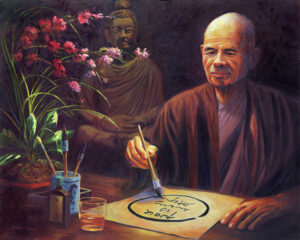
The father of teachings on mindfulness, Zen Master —Thich Nhat Hanh — a global spiritual leader, poet, and peace activist insist, “Drink your tea slowly and reverently, as if it is the axis on which the world earth revolves–slowly, evenly, without rushing toward the future. Live the actual moment.”
Leading a mindful daily routine, being aware of our every action and reaction, every thought, and every word that we speak can add quality to our everyday life. Zen Master summed it up well when he said, “We have to walk in a way that we only print peace and serenity on the Earth. Walk as if you are kissing the Earth with your feet.”
Science Agrees: Slowing Down Changes the Brain
Although mindfulness is rooted in ancient wisdom, the scientific community now validates what spiritual traditions long taught. Neuroplasticity — the brain’s ability to reorganize and grow — thrives when we are intentional and present.
William James, in the late 19th century, captured the essence of neuroplasticity before the term existed: “Our brain can restructure itself based on our perception and experience.”
Slowing down doesn’t hinder achievement — it refines it. A slower pace clarifies our desires, aligns thought with action, and strengthens the pathways that support long-term well-being.
Kaveri Patel’s Poetic Reminder to Stop Running
A mother, poet, teacher of mindfulness ideology, and a healer, Kaveri Patel describes beautifully in one of her poetry, what it’s like to slow down:
Dear you, You who always have so many things to do… your mind spinning like fan blades at high speed… What if you closed your eyes? Would the world fall apart without you? Or would your mind become the open sky… as you just watched and smiled?
Her words expose the exhaustion we carry — and the lie we tell ourselves that we must always be on, always ready, always doing.
People who are aware of the benefits of slowing down, follow different mindfulness practices at least once during their day. Few like to meditate on every task at their hand, and most just like to be mindful only of the tasks they like to do.
Rebecca Solnit: Walking as a Philosophy of Life
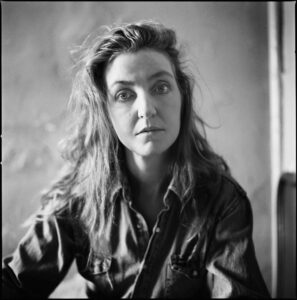
Rebecca Solnit, Buddhist thinker and author of Wanderlust: A History of Walking, offers a simple insight with profound implications: “I suspect that the mind, like the feet, works at about three miles an hour.”
If that’s true, then modern life is moving far faster than thoughtfulness can keep up with. Solnit advocates for preserving time and space to walk — not only for the sake of health, but for the preservation of imagination and presence.
She describes the magic of walking as a union of motion and mindfulness: “Walking is a state in which the mind, the body, and the world are aligned… three notes suddenly making a chord.”
To walk is to move without rushing — to arrive without hurrying.
Slowness Is Not a Luxury — It’s a Practice
Mindful living or slowing down is not about occasional escapes or taking vacations. It is about showing up fully in the everyday:
Taking a bath. Preparing food. Answering an email. Speaking a word. Making a choice.
It means focusing on one thing at a time instead of fracturing yourself across many. It means reclaiming the attention that modern life is constantly stealing from you.
And most of all, it means living — fully, deliberately — rather than rushing through the very life you are trying to enjoy.
Greetings! Very helpful advice in this particular article!
It’s the little changes that will make the most significant changes.
Thanks a lot for sharing!
Superb post however , I was wanting to know if you could write a litte more
on this topic? I’d be very thankful if you could elaborate
a little bit more. Cheers!
Do you mind if I quote a couple of your articles as long as I
provide credit and sources back to your website? My blog site is in the very same niche as yours and my users would definitely
benefit from a lot of the information you provide here.
Please let me know if this ok with you. Regards!
Sure you can.
Aw, this was a very nice post. In concept I wish to put in writing like this additionally ?taking time and actual effort to make an excellent article?however what can I say?I procrastinate alot and in no way seem to get one thing done.
Can I simply say what a relief to seek out somebody who truly is aware of what theyre talking about on the internet. You definitely know the way to deliver a problem to mild and make it important. More individuals must read this and perceive this facet of the story. I cant imagine youre no more common because you definitely have the gift.
An interesting discussion is worth comment. I believe that it’s best to write extra on this topic, it won’t be a taboo subject however usually individuals are not sufficient to talk on such topics. To the next. Cheers
There are some attention-grabbing closing dates on this article but I don抰 know if I see all of them middle to heart. There may be some validity but I’ll take hold opinion until I look into it further. Good article , thanks and we would like more! Added to FeedBurner as properly
That is the precise blog for anybody who desires to search out out about this topic. You understand so much its virtually hard to argue with you (not that I truly would need匟aHa). You positively put a brand new spin on a topic thats been written about for years. Great stuff, just great!
I wanted to write you this little note to be able to say thanks again relating to the breathtaking methods you’ve documented in this article. It’s so surprisingly generous with people like you to convey extensively all that a few people would’ve marketed for an e book to help with making some money for their own end, and in particular seeing that you could possibly have done it in the event you desired. These good ideas likewise worked like a easy way to comprehend some people have a similar eagerness similar to my personal own to know the truth a whole lot more with regards to this issue. Certainly there are a lot more pleasurable times ahead for individuals that read carefully your website.