One troubled marriage or a romance—what havoc can it bring into our lives? Love is one of the most desired feelings or emotions in the world. People seek it all their lives but seldom get enough of it. To be in the warmth of love, affection, and care—that’s all we want? And can we really become emotionally misshapen without it? It’s a powerful thing, but unstable for those who don’t understand it. As humanity’s simplest truth, it remains one of the most difficult forces for people to sustain. Is it really? We can survive without it, can’t we?
Congrats… on nothing. Centuries of poetry, philosophy, and art have been built around it, yet we continue to struggle to open ourselves to it, hold onto it, and trust its presence in our lives. The contradiction is striking: we long for love, yet so often sabotage it without fully understanding why.
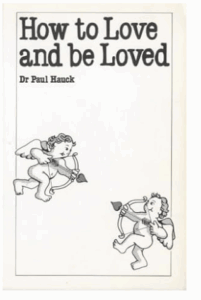
Dr. Paul Hauck was a renowned American clinical psychologist and author who specialized in Rational Emotive Behavior Therapy (REBT). He wrote in his work, How to Love and Be Loved, “The neurotic need for love, rather than the practical desire for love, has caused more pain in people who are supposed to love people than any other single thing.”
“I take exception to this. Unless we are talking about helpless
children I do not see how we can correctly claim that love is
absolutely indispensable and that we are going to go into a life
worse than hell if we are not loved by someone, intimately, and
constantly.
The neurotic need for love rather than the practical desire for
love, has caused more pain in people who are supposed to love
each other than any other single thing.
Why do you have to be loved? Since when does somebody
else’s loving you make you a worthwhile human being? Weren’t
you worthwhile before you were loved? Will you let other people
pass judgement on you (through their love) to say that you are
worthwhile or not? There has to be something wrong when you
turn such an evaluation over to other people who have no exper-
tise concerning you. Why should any other person be able to tell
you whether or not you are acceptable?”
Yoko Ono once wrote, “The opposite of love is fear, not hate.” At first glance, the statement seems almost too simple, but its accuracy becomes clearer the more one observes human behavior. Hate is loud and obvious; fear operates quietly, shaping our impulses long before we speak or act. It is fear—fear of rejection, fear of

loss, fear of repeating the past—that erodes love long before conflict or resentment ever enters the picture. Much of what adults call caution or logic is often fear wearing a more acceptable mask.
Psychologists note that individuals interpret present-day relationships through the lens of accumulated past experiences. and keeps becoming numb to feeling it deep in their hearts. We assume we are responding to what is happening now, but more often, we are responding to memories—unhealed wounds, disappointments, betrayals, or moments of emotional neglect that taught us to guard ourselves. Fear convinces us that withholding love means protecting ourselves, when in truth it only builds distance.
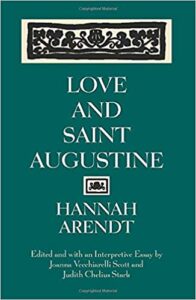
Political philosopher Hannah Arendt articulated this dynamic decades earlier in Love and Saint Augustine, where she wrote, “Fearlessness is what love seeks.
” For her, love is impossible when individuals project imagined disasters into the future or remain entangled in guilt from the past. “The only valid tense is the present,” she argued, calling that love requires presence, clarity, and an ability to meet life without the interference of old narratives. Young people fall in love so easily, not because they understand it better, but because they have not yet developed the elaborate defenses adults accumulate over time.
The idea that love requires a disciplined form of presence echoes through the reflections of John Lennon as well. In an interview recorded in the early 1970s, Lennon said, “There are two basic motivating forces: fear and love. When we are afraid, we pull back from life. When we are in love, we open.”
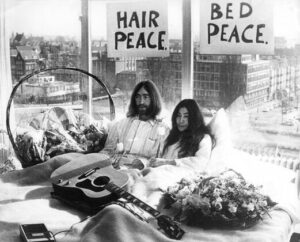
His words, often overshadowed by his celebrity, reveal an unexpectedly psychological understanding of intimacy. Openness requires courage; fear closes the door long before love has a chance to enter.
Lennon famously insisted that love is not self-sustaining, remarking, “You’ve got to work on it like it’s a precious gift—a plant you have to water.” This metaphor is powerful because it challenges the cultural fantasy that love is effortless. Instead, his view places responsibility squarely on individuals to sustain tenderness, honesty, and emotional availability.
Yoko Ono, reflecting on her own experience, admitted that she had nearly given up hope for love, believing it had passed her by. Yet she also acknowledged that love often appears unexpectedly when one remains open to the possibility rather than retreating into cynicism.
Modern life, however, makes emotional openness increasingly difficult. People avoid uncomfortable feelings by numbing themselves through intoxication — alcohol, medication, endless entertainment, or the digital noise that fills any quiet moment. This avoidance may provide temporary relief, but it prevents the introspection necessary for genuine intimacy. Emotional numbing strengthens fear, and fear, in turn, weakens love.
Centuries before psychology or celebrity culture, Rumi expressed the same insight in a single, urgent plea: “Let’s love each other, before we lose each other.” His poetry highlights an uncomfortable human tendency: people often express affection too late—at funerals, in nostalgia, in regret. The living receive less tenderness than the dead. Fear prevents people from offering the love they feel while they still have time.
Across these voices—Ono, Arendt, Lennon, and Rumi—a surprising coherence emerges. They each argue, in different languages and eras, that love does not fail on its own. It fails when individuals allow fear to govern their choices. It fails when past pain dictates present behavior. It fails when vulnerability is treated as danger rather than a connection. And it fails when people wait for perfect conditions that never arrive.
Yoko Ono distilled the idea once more when she wrote, “All your experiences are effective if you act with love.” The emphasis is on action—on choosing love not only when it is easy, but especially when fear urges us to withdraw. The question, then, is not whether love exists or whether we are capable of it. The question is whether we are willing to stop rehearsing our fears, to step out from under the weight of our past, and to meet one another in the only place where love can live: the present moment.
Ever wonder how sometimes it’s easier for a teenager to find true love than for someone who has lived half of his life without having ever tasted the essence of love? One must have struggled in relationships and will always be, definitely, live his life full of fears, may lack ‘purity of being’ and always finds trouble in ‘accepting true love’‘.
“Fearlessness is what love seeks… Such fearlessness exists only in the complete calm that can no longer be shaken by events expected of the future… Hence, the only valid tense is present, the Now,” wrote political philosopher, author, and Holocaust survivor Hannah Arendt in her book Love and Saint Augustine. Love should be put ahead”. It is the only solution to building a world that is better and more just, and it is also the way to eternal happiness and peace.
An elemental truth we might glimpse is that we live in a state of tension between the need to reveal and the need to conceal ourselves, we also carry an urge to share our true feelings, but we fear that we will become vulnerable, or we will be rejected or criticized. As a result, we tend to settle for commonplace discussions about the superficialities of life.
We don’t need to acquire bigger things in life; one doesn’t die if one doesn’t get a bigger house or more vitamins. Human needs are few, and it takes a little to acquire them, in spite of the advertisements on the internet.